
Vera Flores · 23 October 2026
Cross-Platform Synchronization Techniques Fostering Consistency Across Expert-Curated Subject Repositories
Expert-curated subject repositories have grown into essential resources for specialized knowledge, yet maintaining identical content across platforms requires precise synchronization methods that address version conflicts, metadata alignment, and access controls simultaneously. Researchers at multiple institutions have documented how these repositories rely on layered protocols to keep records current without introducing discrepancies that could undermine scholarly use.
Core Synchronization Protocols in Practice
Systems often deploy API-driven exchanges that pull updates from primary sources and push validated changes to secondary locations, while event-driven architectures trigger actions the moment an edit occurs in any connected database. Data indicates that protocols such as WebDAV extensions combined with JSON-LD metadata layers reduce duplication errors by routing only differential packets rather than full copies during each cycle. Observers note that conflict resolution algorithms, which compare timestamps and authorship credentials before committing merges, play a central role in preserving the integrity of collections held by academic and professional networks.
Handling Metadata and Version Integrity
Consistency across platforms hinges on standardized schemas that map fields from one repository structure to another without loss of detail. Studies from institutions in North America and Europe show that embedding persistent identifiers like DOIs or ORCIDs at the record level allows automated checks to verify that citations and authorship data remain uniform even after multiple transfers. When repositories span government archives and university collections, synchronization scripts routinely validate checksums against reference copies stored in redundant locations, catching alterations that might otherwise propagate unnoticed.
Recent Implementations and Data Patterns
In October 2026 several digital library consortia completed phased rollouts of distributed ledger techniques that log every synchronization event in an immutable chain, giving curators an auditable trail for compliance reviews. Figures from those projects reveal that average reconciliation times dropped from hours to under fifteen minutes per batch once the ledger layer was integrated with existing cloud storage gateways. People who manage subject-specific collections in fields such as environmental science and medical history report that these logs also simplify audits required by funding agencies, because each change carries cryptographic proof of origin and timing.
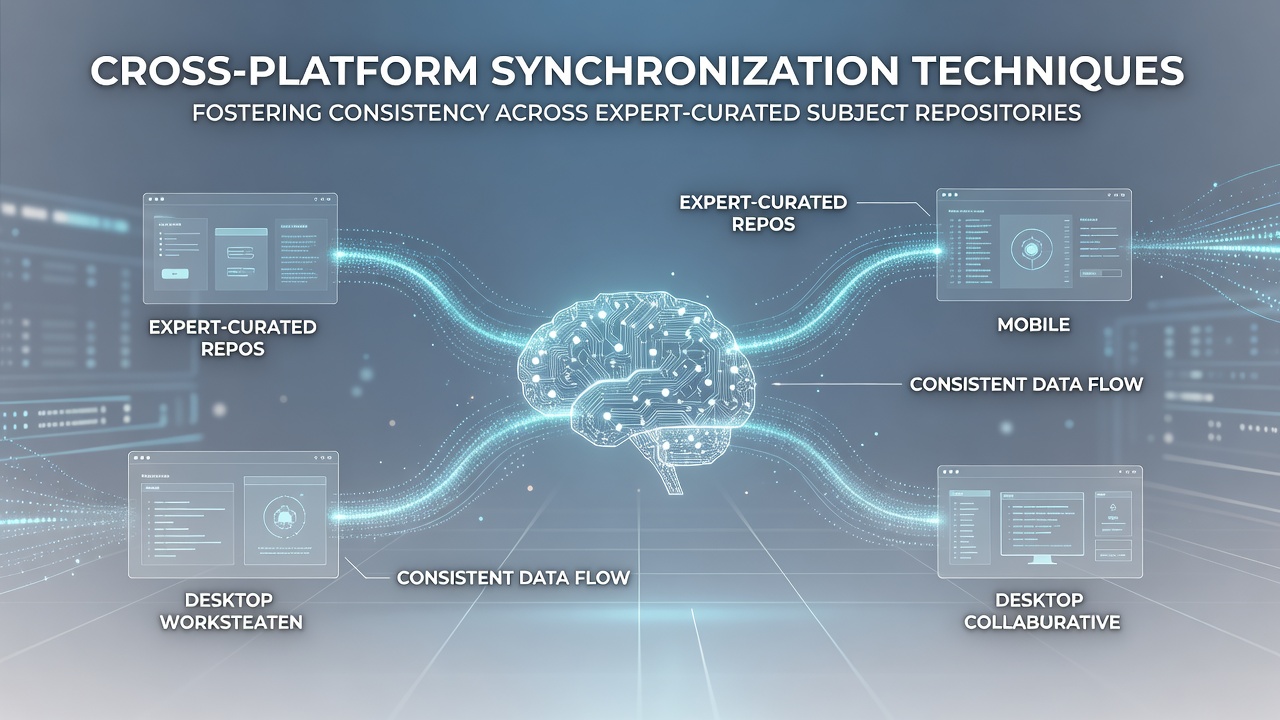
Turnkey services offered by commercial providers now include configurable rulesets that let repository administrators define which fields trigger full propagation and which can tolerate delayed updates. According to documentation released by the Australian Research Data Commons, such rule-based filters have cut unnecessary bandwidth use by nearly forty percent in large-scale deployments while still meeting consistency thresholds set by participating institutions.
Security and Access Considerations
Encryption at rest and in transit forms the baseline for any cross-platform exchange, yet additional controls such as role-based tokens and attribute-based access policies ensure that only authorized curators can initiate merges between repositories. Data from Canadian federal digital heritage programs shows that combining OAuth2 scopes with fine-grained attribute checks prevents unauthorized overwrites even when multiple organizations share the same underlying storage infrastructure. Those who oversee these systems often integrate anomaly detection modules that flag unusual edit patterns, allowing rapid isolation of compromised accounts before synchronization spreads the anomaly further.
Interoperability Standards Driving Adoption
Adoption of frameworks like the Open Archives Initiative Protocol for Metadata Harvesting continues to expand, because it supplies a lightweight method for incremental updates that works across heterogeneous software stacks. Research indicates that repositories adhering to these standards experience fewer mapping errors when exchanging records with partners using different database engines or content management platforms. European Union digital infrastructure guidelines further encourage the use of linked data vocabularies that make cross-repository queries reliable, since uniform term definitions reduce the chance that synonymous labels will create duplicate or conflicting entries during synchronization.
Conclusion
Cross-platform synchronization techniques have matured into dependable tools that support the daily operations of expert-curated subject repositories, delivering measurable improvements in record accuracy and operational efficiency. Continued refinement of protocols, combined with broader uptake of shared standards, positions these methods to handle growing volumes of specialized content while preserving the consistency required by researchers and institutions worldwide.